

It’s Not Always Allah Saying No, Sometimes It’s Your Own Actions Blocking Your Dua
Table of Contents
ToggleWhy Allah blocks certain paths and redirects your destiny
Introduction
There are moments in life when a person feels unheard.
They raise their hands in dua, sincerely and repeatedly, asking Allah for a specific outcome a job, a relationship, relief from hardship, or a change in their condition. Yet despite the persistence of their prayers, the outcome does not arrive the way they expect.
Over time, a painful assumption begins to form: “Maybe my dua is not being accepted.”
But that assumption is not always accurate.
In reality, not every delay is a sign that a dua has been rejected. And not every closed path is simply a matter of divine withholding. Sometimes, the answer is far more uncomfortable the barrier is not unseen, but within one’s own actions, habits, and choices.
A person may be asking Allah for ease while consistently living in a way that creates hardship. They may be seeking barakah while engaging in behaviour that removes it. They may be requesting closeness to Allah while maintaining distance through sin, negligence, or injustice toward others.
The problem is not always the absence of dua.
Sometimes, it is the presence of contradictions that quietly block its effect.
This article is not about denying hope or reducing reliance on Allah. It is about understanding a deeper reality: that acceptance is not only connected to what we ask, but also to how we live while asking.
Because sometimes, what appears to be a closed door is not rejection at all.
It is a reflection.
Many people assume that unanswered dua’s always mean rejection. They pray, they cry, they wait and when nothing changes, they begin to feel that Allah is not responding.
But in Islamic understanding, the response to dua is not always denial or acceptance in the form we expect. Sometimes Allah withholds, sometimes He delays, and sometimes He redirects entirely. And in many cases, what appears as “a closed door” is actually a reflection of something deeper within the servant’s own life.
Allah says: “And whatever misfortune befalls you, it is because of what your own hands have earned, and He pardons much.” (Surah Ash-Shura 42:30)
Scholars explain that this verse does not mean every hardship is a punishment, but it establishes a principle: many of the difficulties people experience are consequences of their own actions, while Allah still overlooks far more than He holds accountable. Meaning, what reaches a person in hardship is often only a fraction of what they have done and much is forgiven and withheld out of mercy.
A person may be asking Allah for ease in life while consistently living in a way that produces hardship. They may be seeking barakah in their provision, but engaging in actions that remove it. They may be asking for peace in relationships, while repeatedly harming others with their words or behaviour. Over time, what they are asking for and what they are doing begin to move in opposite directions.
This shifts the entire way we understand unanswered prayers. Because sometimes the barrier is not the absence of mercy, but the presence of internal contradictions: actions that block what the tongue is asking for.
This article is not about blaming hardship on every mistake. It is about recognizing a deeper reality some doors close not because Allah is far, but because certain behaviours are standing in the way of what is being asked.
When Your Actions Are Cancelling the Very Dua, You Keep Making
Many people sincerely raise their hands and ask Allah for something they desperately want. They ask for guidance, a righteous spouse, financial stability, success, inner peace, or freedom from a particular sin. Yet after making that dua, they continue walking in a direction that leads away from the very thing they requested. When months pass without seeing the outcome they hoped for, they begin to wonder why their dua is not being accepted.
The problem is not always a lack of dua. Sometimes the problem is a contradiction between what the tongue is asking for and what the limbs are pursuing.
You are asking Allah for one direction
while walking every day in the opposite one.
“Imagine a farmer who continuously asks Allah for a harvest but never plants seeds. Or a traveller who prays to reach a destination while deliberately taking roads that lead elsewhere. Most people would immediately recognize the contradiction. Yet many of us unknowingly do the same in our spiritual lives.”
A person asks Allah for a blessed marriage while repeatedly entertaining relationships that destroy trust and purity. Another asks for barakah in wealth while engaging in dishonesty, neglecting obligations, or wasting resources. Someone pleads for closeness to Allah but fills every free moment with distractions that harden the heart. The lips are asking for one reality while daily choices are building another.
Dua is not merely a collection of words spoken in moments of need. It is a declaration of what the heart truly desires. When that desire is genuine, it begins to influence decisions, priorities, habits, and direction. A person who sincerely asks Allah for guidance starts becoming more willing to follow guidance when it appears. A person seeking forgiveness begins distancing themselves from the actions that require constant forgiveness. A person asking for success starts embracing the discipline that success demands.
This does not mean perfection is required before Allah answers a prayer. Every believer struggles. Every believer falls short. The issue is not occasional weakness; it is persistent contradiction. There is a difference between someone who stumbles while moving toward Allah and someone who continuously walks away while expecting to arrive closer.
Many times, people measure the sincerity of their dua by the emotions they feel while making it. They judge its strength by their tears, their concentration, or the length of their supplication. While these things have value, sincerity is also measured by what happens after the hands are lowered. The hours following a dua often reveal how serious a person is about what they asked for.
If someone asks Allah to remove a harmful habit but never distances themselves from the environment that feeds it, they are making the journey harder on themselves. If a person asks for knowledge but refuses to learn, asks for provision but avoids effort, or asks for change while resisting every opportunity to change, they should not be surprised when progress remains slow.
Allah has created a world where outcomes are often connected to causes. Alongside tawakkul comes action. Alongside prayer comes striving. Alongside hope comes responsibility. The believer makes dua while also taking the practical steps that reflect trust in Allah’s promise.
Before concluding that a dua has not been accepted, it may be worth asking a difficult question: Am I living in a way that supports what I am asking Allah for? Are my daily choices moving me toward the destination mentioned in my supplication, or are they carrying me somewhere else?
Sometimes the greatest obstacle between a person and the answer to their dua is not a closed door. It is the direction in which they are walking. When actions begin to align with sincere supplication, a person often discovers that the path they were praying for has been in front of them all along.
And when this contradiction continues for years, a person begins to feel that nothing is changing in their life at all.
“I’ve Been Making Dua for Years, So Why Has My Life Been Filled With Hardship?”
There are people who struggle through a temporary difficulty and eventually find relief. Then there are others who look back over their entire lives and wonder if relief ever truly arrived. Every stage seems to carry a different challenge. Childhood brought one burden, adulthood introduced another, and before one wound could fully heal, a new test appeared. After years of this experience, a painful question often emerges:
“Why does it feel like my dua is never accepted?”
This question does not always come from a lack of faith. Sometimes it comes from exhaustion. It comes from a heart that has spent years hoping, waiting, and trying to understand why life seems harder for them than for everyone else around them.
The first thing to understand is that a life filled with trials is not proof that Allah has abandoned a person. If hardship were a sign of being unwanted by Allah, the Prophets would have lived the easiest lives. Yet history shows the opposite. They faced rejection, loss, loneliness, fear, betrayal, poverty, persecution, and grief. Their closeness to Allah did not remove every difficulty. Instead, it gave meaning to their difficulties.
One reason people feel their dua has not been accepted is because they define acceptance in only one way. They look for a specific outcome and ignore everything else. If the situation remains difficult, they assume nothing has changed. But Allah’s response to a supplication is not limited to giving exactly what was requested at the exact moment it was requested.
Sometimes Allah changes a person’s circumstances. Sometimes He changes the person carrying those circumstances. Sometimes He prevents a disaster that the individual never even knew existed. Sometimes He stores a reward that will only become visible on the Day of Judgment. The servant sees only what happened. Allah sees what happened, what could have happened, and what was prevented from happening.
Another reality is that prolonged hardship can distort perspective. When someone has experienced pain for many years, the mind naturally remembers losses more vividly than blessings. Difficult memories leave deeper marks than ordinary days. As a result, a person may genuinely feel that nothing good has ever happened, even though Allah has continuously sustained them through countless unseen favours.
The ability to survive what should have broken you is itself a blessing. The strength to continue after disappointment is a blessing. The people who stood beside you when others disappeared are blessings. The lessons learned through suffering are blessings. The opportunities you still possess are blessings. These gifts often go unnoticed because they arrive quietly rather than dramatically.
There is also a dangerous assumption hidden within the statement, “My dua is never accepted.” It assumes that the story has already ended. Yet as long as a person is alive, the final chapter has not been written. Many people spent years believing they would never see relief, only to witness Allah transform their circumstances in ways they never imagined. What appears impossible today may become a source of gratitude tomorrow.
Perhaps the greatest test is not the hardship itself. Perhaps it is continuing to trust Allah when the hardship lasts longer than expected. Anyone can maintain hope for a few days or months. The real challenge is preserving trust after years of waiting. This is where faith moves beyond emotions and becomes a conscious decision.
If you have spent much of your life facing difficulties, your pain is real. Your questions are understandable. Your tears are known to Allah. But do not let the length of the journey convince you that Allah has forgotten you. The One who heard your first dua hears your latest one as well.
A delayed answer is not the same as neglect. A difficult life is not proof of rejection. And a season of hardship, no matter how long it lasts, does not have the authority to define your entire story.
Some lives are not harder.
They are just heavier than the heart can currently understand.
The fact that you still turn to Allah after everything you have endured may itself be evidence that He has been holding you all along.
But hardship is not always random. Sometimes it connects deeply to how a person earns and what enters their life.
You Cannot Ask Allah to Bless What Allah Has Forbidden
Recently, a man called seeking answers for the losses he had been experiencing for years. His frustration was obvious. He said that every business he touched failed. According to him, even when others were making profits, he would somehow end up in loss. He described his situation by saying that whatever turned into gold for others became sand in his hands.
As the conversation continued, he repeatedly complained that his duas were not being accepted. He spoke about helping people, supporting others, and trying various ways to improve his condition. Yet there seemed to be an important part of the story missing. When asked about the nature of his business, he hesitated. After repeated questioning, he finally admitted that he had been involved in selling drugs and dealing with interest-based transactions.
Wealth without barakah is not provision.
It is pressure disguised as income.
At that moment, the real issue became clear.
“Many people desperately want Allah’s blessings while refusing to leave the very things that drive blessings away. They ask for barakah in wealth while earning through prohibited means. They ask for peace while living in continuous disobedience. They ask for doors to open while repeatedly walking toward what Allah has commanded them to avoid.”
This does not mean every hardship is a punishment. Nor does it mean every person facing financial difficulties is involved in wrongdoing. However, when someone knowingly persists in major sins and then wonders why they cannot find stability, they should first examine the foundation upon which their life is built.
A farmer cannot plant thorns and expect roses to grow. Likewise, a person cannot continuously nourish their life with what Allah has forbidden and then expect the fruits of barakah to appear.
One of the greatest deceptions of the human ego is focusing on the good we do while minimizing the wrong we refuse to abandon. A person may say, “I help people,” “I donate,” or “I support my family.” These are noble actions. Yet good deeds do not give anyone permission to persist in what Allah has clearly prohibited. Obedience in one area cannot be used to justify rebellion in another.
Sometimes people treat dua as a solution while refusing to address the cause of their problem. They want Allah to change the outcome without changing the behaviour that produces the outcome. They ask for provision but continue dealing in unlawful earnings. They ask for protection while engaging in activities that invite destruction. They ask for guidance while ignoring guidance that has already been given.
The question is not always, “Why is my dua not being answered?” Sometimes the more important question is, “What am I doing that stands between me and the blessings I seek?”
“True repentance is not merely feeling regret. It involves turning away from the source of Allah’s displeasure and taking sincere steps toward what pleases Him. A person who abandons unlawful income for Allah may face temporary difficulty, but they have begun walking toward barakah. A person who leaves interest based dealings, dishonest transactions, or harmful activities has removed one of the greatest barriers between themselves and divine assistance.”
Allah’s mercy is vast, and no sinner is beyond forgiveness. But forgiveness begins with honesty. It begins when a person stops blaming fate, bad luck, other people, or unanswered duas and starts examining their own relationship with Allah.
Many people spend years searching for the reason their life lacks peace while carrying that reason with them every day.
Before complaining that your dua is not being accepted, ask yourself a difficult question: Am I asking Allah to bless something that He has already forbidden?
Sometimes the answer to a person’s problem is not a new dua. Sometimes it is a sincere tawbah that changes the course of their entire life.
Yet even when a person tries to fix their situation spiritually, they may still not see results if the heart and lifestyle remain unchanged.
Some Problems Cannot Be Ruqyah’d Away Until You Leave the Sin Feeding Them
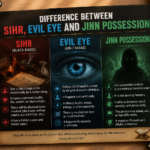
One of the most common mistakes people make is assuming that every difficulty in their life is caused by sihr, evil eye, or jinn possession. As a result, they move from one raaqi to another, listen to hours of ruqyah shariah recordings, drink ruqyah water, and search for spiritual cures, yet their situation remains unchanged.
After months or even years of this cycle, frustration begins to grow.
“The ruqyah isn’t working.”
“The treatment isn’t helping.”
“Why am I not getting better?”
But sometimes the real question is not whether the ruqyah is working. The real question is whether the person is willing to leave the sin that continues to feed the problem.
Imagine a person trying to extinguish a fire while continuously pouring fuel onto it. No matter how much water is used, the flames continue because the source of the fire remains untouched. In a similar way, some people seek spiritual healing while refusing to abandon the actions that damage their spiritual well-being.
A person listens to ruqyah every day but continues dealing in interest. Another seeks treatment for unexplained difficulties while maintaining forbidden relationships. Someone complains about constant darkness in their life but neglects prayer for years. Others desperately want relief from spiritual distress while regularly engaging in activities that Allah has prohibited.
Then they wonder why nothing changes.
This does not mean every hardship is caused by sin. The Prophets themselves faced immense trials despite being the most righteous people. However, there is a difference between a test sent by Allah and a wound that a person continues reopening through their own choices.
Many people are looking for a cure while protecting the disease.
You cannot heal what you keep reopening.
The reality is that sins do not merely affect the Hereafter. They leave traces in a person’s life. They can weaken the heart, remove barakah, cloud judgment, increase anxiety, and create distance between a servant and Allah. Over time, these effects accumulate until a person feels trapped, confused, and spiritually exhausted.
Yet instead of examining their actions, they search for external explanations.
Everything becomes sihr.
Everything becomes evil eye.
Everything becomes a jinn problem.
Rarely do they stop and ask, “Is there something in my life that Allah wants me to leave?”
One of the most powerful forms of ruqyah is sincere tawbah. Before searching for hidden enemies, a person should examine their relationship with Allah. Are they guarding their prayers? Are they earning through lawful means? Are they abandoning major sins? Are they fulfilling the rights of others? Are they obeying Allah privately as much as they appear to obey Him publicly?
These questions are uncomfortable, but genuine healing often begins with uncomfortable honesty.
Many people want the protection of Allah while maintaining habits that invite His displeasure. They want spiritual strength without spiritual discipline. They want relief without repentance. They want results without change.
Yet throughout life, Allah teaches us that causes matter.
If someone repeatedly harms their body, they cannot expect medicine alone to solve the problem. Likewise, if someone repeatedly harms their soul, ruqyah alone may not address the deeper issue.
The goal of ruqyah is not merely to remove harm. It is to reconnect a servant with Allah. It is a means of seeking protection, healing, and closeness to the One who controls all benefit and harm. When that connection grows stronger, a person naturally becomes more willing to leave the behaviours that damage it.
Sometimes a person’s breakthrough does not occur when a jinn leaves.
Sometimes it happens when a sin leaves.
Sometimes the door that finally opens is not opened by another ruqyah session but by sincere repentance made in the middle of the night.
Before assuming that every problem requires another treatment, take a moment to reflect on your own life. Ask yourself whether there is a habit, relationship, source of income, or hidden wrongdoing that you continue carrying despite knowing it displeases Allah.
Because there are situations where the greatest barrier to healing is not sihr.
It is the sin that keeps feeding the wound.
At this stage, some people begin to feel misunderstood by life itself and start seeing themselves as constant victims of circumstances.
You Stand Before Allah in Prayer, But How Do You Stand Before His Creation?
One of the most dangerous forms of self-deception is believing that worship can compensate for cruelty.
There are people who never miss a prayer. They fast during Ramadan. Their tongues remain busy with dhikr. They attend religious gatherings, listen to Islamic lectures, and appear deeply concerned about their relationship with Allah. To everyone around them, they seem righteous.
“Yet behind closed doors, a completely different person exists.”
They raise their voices at their parents. They humiliate those who love them. They emotionally manipulate family members. They cause pain through their words, their behaviour, and sometimes even their actions. They leave wounds in the hearts of people who spent years sacrificing for them.
Then, when life becomes difficult, they raise their hands and ask, “Why is my dua not being accepted?”
The question itself reveals a problem.
Many people have divided religion into two separate categories. The first is their relationship with Allah. The second is their relationship with people. They work hard on the first while neglecting the second. They imagine that as long as their prayers are performed, their fasting is complete, and their worship appears correct, everything else is secondary.
But Islam never taught this separation.
A person cannot repeatedly harm Allah’s creation and expect to enjoy complete peace with the Creator.
The tragedy is that some individuals become so focused on acts of worship that they stop examining their character. They count their prayers but not the tears they caused. They remember every fast but forget every insult. They keep track of their dhikr but never account for the hearts they broke.
As a result, they begin seeing themselves as victims rather than contributors to their own problems.
Some people are not trapped in problems.
They are trapped in their own narrative of innocence.
If their parents become distant, they blame their parents.
If family relationships become strained, they blame relatives.
If people avoid them, they blame society.
If their duas remain unanswered, they blame everything except themselves.
Rarely do they stand before a mirror and ask a painful but necessary question:
“What if I am not as innocent as I think I am?”
The human ego has an incredible ability to highlight its own virtues while hiding its own faults.
A person remembers every favour they did for others but quickly forgets the harm they caused.
They remember the one harsh word spoken to them but forget the hundred harsh words they spoke to someone else.
They remember feeling hurt but overlook the hurt they inflicted.
This is why self-accountability is one of the rarest qualities in the world.
It is easy to identify injustice when it comes from others.
It is much harder to identify injustice when it comes from ourselves.
Some people spend years complaining that their parents do not understand them while never asking whether they understand their parents.
They speak about their own emotional pain while ignoring the emotional scars they created.
They discuss respect while withholding respect.
They demand kindness while refusing to show kindness.
They want compassion while displaying very little compassion themselves.
Then they wonder why there is no barakah in their lives.
The issue is not that Allah is unaware of their prayers.
The issue is that Allah is also aware of how they treat His servants.
Many people become deeply concerned about their standing in front of Allah on the prayer mat but pay very little attention to their standing in front of people throughout the day.
Yet the same religion that commands prayer also commands kindness.
The same religion that teaches fasting teaches mercy.
The same religion that encourages dhikr prohibits oppression.
The same religion that calls a person to worship Allah also calls them to honor parents, fulfill trusts, speak truthfully, and treat others with dignity.
When these teachings are separated, religion becomes incomplete.
One of the most frightening realities is that a person can become accustomed to worship while remaining blind to their own wrongdoing. They begin to assume that religious acts automatically make them righteous.
But righteousness is not measured only by what happens between you and Allah.
It is also measured by what happens between you and the people whose paths cross yours every day.
Before asking why your life feels heavy, before questioning why your relationships keep collapsing, before wondering why your duas seem delayed, pause and reflect.
Have you sought forgiveness from the people you hurt?
Have you repaired the damage you caused?
Have you acknowledged your mistakes with the same honesty that you acknowledge your acts of worship?
Because sometimes the obstacle standing between a person and peace is not a lack of prayer.
It is a lack of justice.
Sometimes the problem is not that Allah has stopped listening.
It is that the cries of those we wronged have reached Him before our own duas.
And perhaps the most important question is not:
“Why is my dua not being answered?”
Perhaps the real question is:
“How many hearts am I asking Allah to heal while I continue breaking hearts myself?”
One of the strongest fuels of this mindset is a disease that quietly destroys relationships and barakah alike.
Worship Alone Is Not Enough If You Oppress People
Allah does not only judge how often we stand in prayer. He also judges how we treat the people around us.
Many people focus heavily on Huqooq Allah (the rights of Allah) while becoming careless regarding Huqooq al-Ibad (the rights of people). They pray, fast, make dhikr, and recite Quran, yet their parents fear their temper, their family suffers from their behaviour, and those closest to them carry wounds caused by their words and actions.
Allah says:
Notice something remarkable in this verse. Allah mentions worshipping Him alone and immediately follows it with kindness toward parents. This shows that honoring parents is not a secondary matter in Islam. It is mentioned alongside one of the greatest obligations: Tawheed.
A person may spend hours in voluntary worship while simultaneously humiliating the mother who carried them for nine months or hurting the father who sacrificed years of his life for them. Such a person should not feel secure merely because they perform religious rituals.
The Prophet ﷺ warned us about a person who appears righteous on the outside but arrives before Allah carrying the rights of others.
He asked his companions:
“Do you know who the bankrupt person is?”
They said, “The bankrupt among us is the one who has neither money nor property.”
He said:
“The bankrupt of my Ummah is the one who comes on the Day of Resurrection with prayer, fasting, and charity, but he comes having insulted this one, slandered that one, consumed the wealth of another, shed the blood of another, and struck another. So, his good deeds will be given to them…” (Sahih Muslim)
This hadith should shake every heart.
Notice that the Prophet ﷺ did not describe a person who abandoned prayer or neglected fasting. He described someone who came with worship. The tragedy was that they had also harmed people.
Their salah was there.
Their fasting was there.
Their charity was there.
But so were the complaints of those they oppressed.
Many people fear that their prayers are not perfect. Few people fear that they are hurting others while believing themselves to be righteous.
Before asking why your dua is delayed, examine how you treat your parents, spouse, children, relatives, neighbours, employees, and anyone under your authority.
Because a person can raise their hands to Allah while the very people they wronged are raising their hands against them.
And that is a reality every believer should take seriously.
You cannot hurt people in private
and expect peace in public.
When a person corrects their relationship with Allah and His creation, doors do not just open they become meaningful again.
You Cry Over Unanswered Duas While Creating the Hardship of Others
There is a type of person who constantly complains about their life. They speak about betrayal, bad luck, delays, financial struggles, broken relationships, and unanswered duas. Every conversation revolves around how unfairly they have been treated.
To the public, they appear to be victims.
But behind closed doors, a different story exists.
They spread allegations without proof.
They damage reputations through gossip.
They plant suspicion between family members.
They turn people against one another.
They interfere in marriages.
They create conflict where there was peace.
They watch others struggle and secretly feel satisfied.
Sometimes jealousy becomes so severe that they cannot tolerate seeing another person succeed, find happiness, receive opportunities, or earn respect. Instead of celebrating Allah’s blessings upon others, they begin searching for ways to diminish them.
Then they raise their hands and ask:
“Why is Allah not answering my dua?”
The question itself reveals a frightening lack of self-awareness.
Many people think oppression only means physical violence. They imagine an oppressor as someone who steals wealth, sheds blood, or openly abuses others.
But oppression often begins with the tongue.
A rumour can destroy a family.
A false accusation can ruin a reputation built over decades.
A lie can cost someone their marriage.
A malicious statement can leave emotional scars that last for years.
A jealous act can create suffering far beyond what the person intended.
The one who spreads the poison may move on after a few minutes.
The victim may spend years living with the consequences.
Allah says:
“And do not let the hatred of a people prevent you from being just. Be just; that is nearer to righteousness.” (Surah Al-Ma’idah 5:8)
Notice that Allah does not only command justice toward those we love.
He commands justice even toward those we dislike.
How then can a person justify false allegations against someone who has done nothing wrong?
One of the most dangerous diseases of the heart is jealousy.
Jealousy does not merely wish for blessings to disappear.
It often pushes a person to become an active participant in another person’s suffering.
Instead of improving themselves, they dedicate their energy to damaging others.
Instead of correcting their faults, they become experts at discussing the faults of everyone else.
Instead of making sincere dua for others, they secretly hope for their downfall.
The Prophet ﷺ said: “Beware of envy, for envy consumes good deeds just as fire consumes wood.” (Sunan Abu Dawud)
Jealousy does not only destroy others.
It slowly deletes your own barakah first.
Think about that warning carefully.
Years of worship can be damaged by a disease hidden inside the heart.
Many people fear jinn, evil eye, and black magic.
Few people fear the jealousy residing within themselves.
The Prophet ﷺ also said: “Whoever believes in Allah and the Last Day should speak good or remain silent.” (Sahih al-Bukhari, Sahih Muslim)
How many family disputes would disappear if people followed this single teaching?
How many friendships would survive?
How many marriages would remain intact?
How many innocent people would be spared humiliation?
Yet some individuals use their tongues as weapons and then act surprised when peace disappears from their own lives.
Another form of self-deception occurs when a person convinces themselves that their worship erases their mistreatment of others.
They pray.
They fast.
They recite Quran.
They attend religious gatherings.
Yet they continue spreading lies, creating divisions, manipulating narratives, and presenting themselves as innocent.
The Messenger of Allah ﷺ described the true bankrupt person.
He said that a person may come on the Day of Judgment with prayer, fasting, and charity, but because they harmed others, their good deeds will be transferred to those they wronged until nothing remains.
This should terrify every believer.
The victim may forget.
People may never discover the truth.
Society may believe the lies.
But Allah witnessed every word.
Allah heard every conversation.
Allah knows every hidden intention.
Allah knows who started the conflict.
Allah knows who manipulated the situation.
Allah knows who pretended to be innocent while secretly causing harm.
Some people spend years asking Allah to remove difficulties from their lives while they continue placing difficulties in the lives of others.
They pray for ease while creating hardship.
They ask for mercy while showing little mercy.
They seek justice while acting unjustly.
They want Allah to defend them while they attack innocent people.
Such a person should pause before asking why their heart feels restless.
Before asking why relationships continue breaking.
Before asking why blessings seem absent.
Before asking why their dua’s appear delayed.
Because perhaps the problem is not that Allah is ignoring them.
Perhaps they have ignored the rights of His servants for too long.
The believer who reads this should not immediately think about someone else.
They should think about themselves.
Have I spread information without verifying it?
Have I damaged someone’s reputation?
Have I allowed jealousy to influence my actions?
Have I contributed to another person’s suffering?
Have I presented myself as a victim while hiding my role in the problem?
These questions are uncomfortable.
But sometimes discomfort is the beginning of repentance.
And sometimes the most valuable article is not the one that exposes other people.
It is the one that acts as a mirror.
A mirror does not flatter.
A mirror reveals.
And if a person recognizes themselves in these words, they should not feel despair.
They should feel gratitude.
Because recognizing the disease is the first step toward the cure.
The real test is not whether you recognize sin in others.
It is whether you can recognize it in yourself without excuses.